
My daughter is a sixth year, third grade teacher in a small country school. Every week we talk shop about what’s happening in her classroom, educator headlines, book clubs, restorative practices workshops, and her helping colleagues through the teacher’s union. A few weeks ago, she mentioned an article, Biting, kicking, wandering: Teachers see rise in misbehavior even among the littlest kids,1 from the LA Times. She forwarded it to me.
Unfortunately, the challenging behaviors mentioned in this article are getting worse since Covid-19. Author Jackie Mader said, “In 2021, researchers at Brown University found that toddlers who were born during the pandemic had significantly lower verbal, motor and overall cognitive performance compared to toddlers born in the previous decade. Those ‘pandemic babies’ would now be around 6 years old and in first grade.”
Challenging Behaviors
In October 2025, similar headlines read locally, Modesto TK-2 teachers report increased violence, disruption from students.2 Two national news stations, several videos, and related articles addressed this topic. Here’s a compiled list of some challenging behaviors from these sources and the LA Times article.
- Can’t stay seated on carpet for story read aloud
- More disruptive during lessons
- Trash cans knocked over
- Scholars roaming around the classroom
- Don’t know how to talk to peers and educators respectfully
- Peeing on classmates
- Destroying property, including bathrooms and classroom supplies
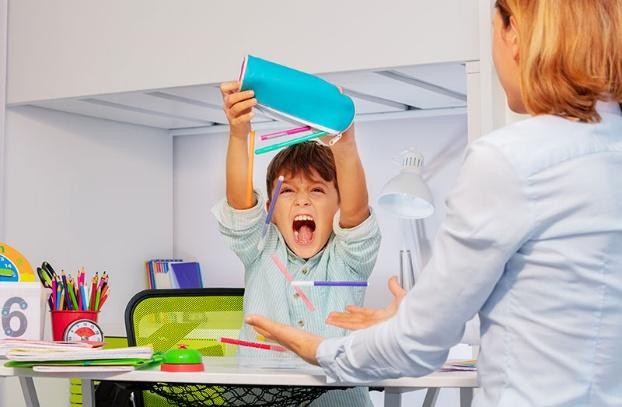
- Flipping desks, throwing chairs and objects
- Elopement – leaving the classroom without permission
- Evacuating scholars from the classroom due to student’s behaviors
- Lashing out physically, including biting, kicking, & punching staff and students in the face. (Many districts used to expel scholars who were violent to staff).
Teachers Persevere with Little Success
The articles and videos mentioned a wide variety of discipline techniques teachers tried to tame the classroom chaos without success. One teacher spent six weeks at the beginning of the school year practicing classroom routines such as throwing away your trash and how to hold a pencil.
New Norms Versus Suspensions and Expulsions
The 1980s and 1990s get tough on crime legislation, resulted in zero tolerance policies in school districts. An unexpected outcome was disproportionate suspensions and expulsions for students with disabilities and students of color. Twenty years ago, Modesto City Schools consulted experts from the University of California to redress the issue.
Concerned with inequities in discipline strategies, in 2013 California passed an education code banning suspensions of K-3 students for willful defiance. This ban extended to all K-12 students in 2023. Additionally, teachers were restricted from retaining a student during recess as a form of discipline.
What’s happening at your school site? Are scholars kicking, punching, and biting classmates and staff? In part two of my blog post, we will discover two options schools are using. Stay tuned.
Sources
- Jackie Mader, LA Times, Syndicated Content, February 17.
https://www.latimes.com/california/story/2026-02-17/teachers-see- increase-in-classroom-behavior-problems
- Modesto TK-2 teachers report increased violence, disruption from students. Atmika Iyer. Updated October 24, 2025
.https://www.modbee.com/news/local/education/article312620204.ht ml#storylink=cpy
- Jackie Mader, LA Times, Syndicated Content, February 17.
Image Sources
- aba-for-problem-behaviors [mestrebehavior.com]
- zero tolerance [commons.wikimedia.org]